Showing posts with label career. Show all posts

Wednesday, 30 April 2025

What skills should I develop?

Recently I had the pleasure of spending time with some postdocs from my old university, helping those of them considering leaving academia to prepare for job interviews and generally think about how they can position themselves for success in their future careers. The conversation got around to the core skills that everyone should develop, and they expressed some surprise at the things I pulled out - the same reactions I've had from software engineers when having the same conversation - so I thought it worth writing them down. In no particular order, these are they.

Writing

Like it or not, we end up writing a lot and I've found this only gets more true with seniority. Whether it is the ever-growing mountains of email, papers laying out a plan or strategy, or presentations we're going to be writing something down and we need to be both good at it and fluent enough to knock out quality documents at speed. The brutal truth is that people will judge you if your writing is incoherent and / or full of spelling and grammatical mistakes - developing a writing style is one of many tiny ways we can position ourselves as competent and helpful.

Writing at speed is key. Workloads just keep growing and, assuming you want to stay ahead, you'll need to move "writing a strategic document" from the sort of task where you put aside a month of thinking time to something you just do between other work. In more detail, that means having a writing process (and being able to deal with a blank page) and getting a feel for what "good enough" looks like for the different types of docs. This only comes from experience so I always recommend practising writing to everyone, whatever career stage they are in. I write this blog and I've kept a one-post-per-month routine since 2016 as a discipline to force me to keep writing and thinking about how I lay out my thoughts. Is it annoying? Yes, of course. But, while there is definitely much room for improvement, I feel much more confident writing quickly these days. In fact, I wrote a post about why I write a blog a few years ago.

Presenting

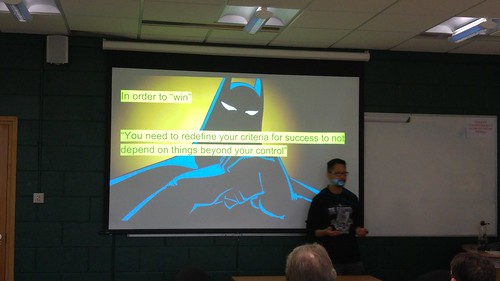
Second in the list of skills people don't want to develop but really should, we have presenting. Presenting comes in two forms - putting forward an idea to a room full of people (ie some variation of speaking to a PowerPoint) and something more freeform (ie speaking off the cuff to a room of people). These are different skills and both need practising. You will, at some point, need to present and ideally the first time you do this you aren't trying to secure funding from the investment board or explaining to the trustees / shareholders your five year vision. Like any skill, this takes practise to improve.

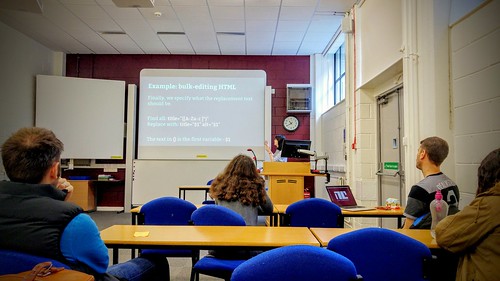
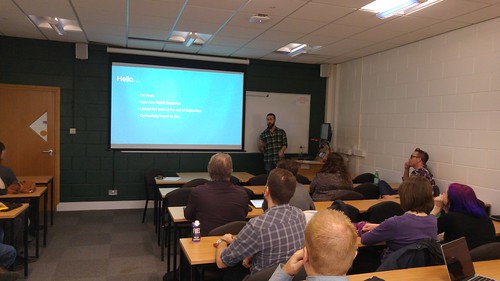
Earlier in my career I ran a fortnightly Show & Tell event which was a low-stakes way of getting people to do presentations and we all learned a great deal of confidence and technique through this. Again, I wrote a post on why Show & Tell really helped some years ago and I stand by all of that.

Talking off the cuff can be harder to practise, but when you end up chairing meetings or just the most senior person in the room you can be sure people will look to you to fill time when other people are setting up. Ideally we learn to stop using crutch or filler words and then we just sound ... smooth? I gained experience by chairing Show & Tell for many years - I think there is a useful lesson there about forcing oneself out of the comfort zone to develop new skills.

Storytelling

This one underpins both writing and presenting. When we reach out to people, we are usually either conveying information or attempting to persuade them of something. In either case we, presumably, want them to listen and understand what we are saying so we need to learn how to be compelling. We need to be able to tell a sensible, well-structured story understanding our audience and how to reach them. This is a hard skill to develop and really only comes through practising the above, and getting feedback. Alternatively, you could run some Dungeons & Dragons. Seriously!

Reading

Rather obviously, if we want to get on we need to be able to read. However, less obviously, as one climbs the hierarchy the amount of reading just goes up and up. Whether it's board papers, strategy documents or yet more email the torrent never ends and I've found that the more senior I get, the more people think that long = good. Reading fast and accurately is a skill that like everything else needs developing. Of everything on here, I find this one hardest. I find focusing on piles of tedious papers next to impossible so I have had to develop various skills to take a run at it. For me, I find the best approach to maintain focus is to take notes - or ideally annotate the papers. I've been using a Remarkable as an alternative to unending printing. I need a semi-controlled environment, with no alerts or distractions and some appropriate music and if these are updates I need to add a narrative to make me lock into the information - ie ask and answer "why am I reading this?" beyond "because I have to".

You can also ask an appropriate AI to summarise papers but don't come to me the first time it gets it completely wrong.

Basic numeracy

Believe it or not, numbers are important. Sorry. Far too many people haven't developed basic mental arithmetic skills and this creates situations where they are pulling out calculators to add two numbers together. While this is slow, and burns time you likely don't have, there is a more important aspect to basic numeracy. We all need a basic feel for numbers to be able to spot mistakes in budgets or other detailed documents. We need to be able to see 143 x 6 = 1200 and immediately get that mental nudge that says something isn't right even if we don't know what "right" is.

Again, practice makes perfect. I typically add up my shopping as I walk around the supermarket and see how close I am when I scan at the till - this helps keep me fluent at juggling numbers in my head. As a child I learned my multiplication tables and some of the simple tricks for approximating sums. For example, here 143 is approx 150, and that multiplies easily so in my head I go 143x6 => 150x6 => 300x3 = 900 so I'm expecting something a bit under 900. Thus 1200 is immediately a warning bell that someone has math'd wrong or something isn't right in the spreadsheet formulae. I cannot stress enough how many budget errors I've caught this way.

Using your tools - Word / Excel

Computers are a pain, but they are an essential pain. Do we know how to use PowerPoint? Or Word? Do we know when we should be using each tool? Similarly, learn the keyboard shortcuts. They help so much, both within an application and also when moving information between them. Don't forget Excel - and learn to use simple formulae for managing data. If it helps, using formulae will make maths mistakes less likely!

There is an even more basic computer skill. Can we type fast and accurately - and ideally touch-type? There are "proper" ways to touch-type and ways to learn these techniques, however personally I learned to type via brute force playing online games in the late '90s where you communicated by text and either typed fast or stayed silent. This is no longer an option, so instead get writing those blog posts (from "writing" above).

If you're in Tech you're likely thinking this section is really easy buuuut I know a lot of software engineers who stick to code and don't really develop these basic skills then find themselves very slow when asked to do "normal" things.

These days I will argue that getting familiar with AI and interacting with a prompt in something like ChatGPT is also a core skill. This is more vague, and your workplace will no doubt have policies around this, but like learning Excel / Word / PowerPoint it comes down to having some idea of the capabilities of your fingertips.

Interview technique

Everyone sane hates interviews. I'll be honest, I hate being on the other side of the table too. However, we all need to learn the basics of interviews. Learn what a competency question is and the mystic secrets of STAR answers and we have a framework for preparing for an interview. Then we learn to talk off the cuff and learn to tell a story (both above!) and we can fill in the gaps. Then get a job you like so you don't have to do them very often...

And lo, this is my list of the absolute basics. When I go through this list with people, most folk start with "yeah that's really obvious" then some slow enlightenment dawns as we drill in to each point. There are specific skills here, and we need to develop them with some deliberate action. There are also books on most of these areas (while I list these as "basic" I'm well aware that they all have the potential to be incredibly skilled and I don't mean to diminish the experts in these spaces) and there are certainly a couple missing (eg basic design - that is making your presentations / documents look not-horrible). I also skipped anything about basic time management or leadership skills as, for me, these are beyond the absolute basics. In my experience, we all neglect at least one (and likely many) of these areas and this will create issues. So I encourage everyone to deliberately practice writing, speaking, reading, telling a story, counting, computering and interviewing. It's an incredibly basic list, and that is why we often don't think about them.

Thursday, 26 December 2024

Leaving Macmillan

Back in mid-October I closed my Macmillan laptop (my MacTop, if you will) for the final time, leaving my role as Director of Engineering. I left behind the Engineering division I had created and some excellent and passionate people - not an easy decision and I'm still working through how I feel about everything, including the wider Tech industry. This is one reason it has taken so long to write this reflection.

I was at Macmillan for nearly three years. When I started, the organisation had some in-house technical capability but the people were scattered around working under project managers on systems that were badly in need of modernisation. I can write lots about how we created technical strategy, developed a software engineering culture and community and brought in greater automation, and all of this would be true, but the most important work was bringing the software engineers together and giving them a voice. The most important work is always with the people.

Over these three years I've seen many people grow into new versions of themselves by giving them space and encouragement. Some have embraced the wider context of their roles - looking beyond the specific technical problem to why it's important and realising they have a voice in this space, which can result in better solutions. Some have taken better ownership of their work, owning processes rather than simply implementing them and then flourishing as they realise they can improve and refine. Others have been able to express the needs of a previously ignored service - very common with infrastructure elements - and deal with issues and annoyances to move those areas forward. Still others have taken on line management or team leadership duties and started their journey into wider leadership activities.

I've spent the last eight years or so of my career trying to show the value of technical voices at all levels in an organisation, so having the opportunity to demonstrate this in action while enabling lots of people to grow and flourish has been great.

On a personal level, I've also grown a lot in these three years. I've learned a ton about being part of a director cohort in an organisation, and this is the first time I've worked in the charity sector. I was also recognised at an industry event as part of a group of up and coming "next CIO"s which is not only fantastic for the ego, it's also something I wouldn't have even considered a couple of years earlier. I've experienced several forms of restructure, all of which have taught me something new, and I've been responsible for shifting organisation culture in ways that go far beyond what I've done in the past.

I've also worked with some amazing people who have helped shaped my thinking and career in hugely significant ways. I'm not going to name names, but if you think it's you you're probably right. If I worked closely with you and you DON'T think it's you, you're probably wrong. In both cases, thank you.

So why leave? Primarily, the organisation needs to crack some really knotty legacy technology issues. I've been working on these since day one, and I believe I've built foundations on which solutions can now surface. However this has been a long journey, including migrating physical server rooms and a load of hiring and restructuring, and I did not feel I was the right person to take things forward in the next phase. The org needs someone fresh and enthusiastic for the challenge and after working on this for three years, I need a new problem to re-motivate me.

However, I am still sad to leave behind some excellent people - some of whom I've helped make serious changes to their careers. I'm going to miss them, and I hope I can work with them again. I've been part of a huge change in Macmillan technology, and this is something for which I can feel some pride. A friend says that a mark of success is leaving the place better than you found it, and I think by that metric I've done ok.

Looking forward, I'm enjoying some time away from work and considering my options. Reading back my Leaving GDS post was an interesting insight - at the time, I said "I'll likely jump into another maelstrom of "interesting problems"" and this proved to be rather prophetic. I am my own worst enemy when it comes to containing work and maintaining balance with the rest of life so I'm going to embrace this break as another opportunity to reset myself. Certainly, I'm currently enjoying the freedom to work on my health and fitness and learn some new skills. I've been making candles and writing lots of code, as well as starting to write again - all things I've been too tired to do while in role. I really want to find the not-work person underneath and bring them out enough to do a better job surviving the next job.

I'm considering my next professional steps carefully, especially how much Data I want to be taking on going forward. Do I want to push in the direction of a Chief Data Officer role? Do I want to stay very much in the core technology space? Regardless the answer, this is certainly something to look at in any job spec to avoid adopting data through the back door into a software engineering role, which I feel will set up a role for disaster. The tech industry is going through another seismic shift - we are in the early stages of the AI revolution, with everyone racing to "do data and AI". There is a huge software engineering component to this, but it goes a lot wider into organisational process and culture, and this work needs clear air and appropriate reach to have any chance of success without being overloaded. Fortunately, culture and technology is an intersection I have a lot of experience working on so there is certainly also potential here.

Before jumping anywhere, I need to revisit my own motivators and see what I actually want to be doing. Macmillan has been amazing experience, but I want to build on this, not just do it again somewhere else without some serious thought first. Last time I wrote one of these posts I said I was keen to continue promoting technical leadership and I feel the same way now, but I need to decide how.

In the meantime, if anyone would like to talk about the tech industry, data, growing your software engineering capability, people or anything else please do give me a shout in the new year - I'm easy to contact on LinkedIn or Twitter.

Right now, I'm enjoying the peace in that strange time between Christmas and New Year when the world is on pause and nobody expects anything of you.

Monday, 28 August 2023

Looking to the future

One of the symptoms of seniority that I still struggle to process is this idea that people want to hear what I have to say and understand how they can (professionally at least) be me. It's a weird feeling, both humbling and frightening, and has only grown in the last few months. I'm being asked to speak at conferences, and in a few weeks I'm on a panel discussing the future of the Tech industry. Why? Surely there is someone better for this?

Honestly, this is a question I've been asking myself since my time in the Civil Service, where I found myself in a meeting discussing how to spend five million pounds of public money. I should write a post about getting over myself and getting on with it. This, however, is not that post.

I moved away from development into management so I could make a difference to the industry. How do people get into Tech? How do people move to more senior technical roles? Showing the importance of senior leadership with technical backgrounds, and helping people get the right experience to be credible candidates. These are core to my motivation and it seems I have the beginning of a platform. This is a responsibility I want to take seriously. What can I offer to the wider industry?

I've got a few ideas and since there seems to be a few people reading this blog from LinkedIn, I suppose I can offer them up. First and foremost, I'm thinking of creating a set of interviews with people in my position telling their story, talking about how they got to where they are today. I don't kid myself that I'm some kind of Steve Jobs or Bill Gates, but then neither are the overwhelming majority of people. I am, however, fairly successful in the industry. I'm in a position that someone getting into Tech can reasonably aspire to attain. Not inspirational perhaps, but practical. There are lots of people like me, and the stories don't get told often enough so I like the idea of creating some kind of resource showing the different paths people can take. At the moment I'm thinking a podcast, but format to be decided. If you're reading this and think it's an interesting or useful idea, please do reach out.

In addition, I sit on the London Data Board, and I'm happy to offer some time to support other initiatives if they come up. Again, do reach out - especially if they are something to do with nature or animals. On top of this, I already do some mentoring, and I've got a whole post about that coming up soon.

I opened saying that people asking about my career and how to "be me" is weird. Actually, on reflection, it's a weirder feeling that I'm in a position to be feeling a sense of responsibility to the industry and asking any of the above questions. It's a great privilege to be working somewhere where I can spend some time looking outwards and hopefully make a difference. That's my intention anyway - so I've written it down in public so I can hold myself to account.

Saturday, 30 October 2021

Leaving GDS

This month I left the Civil Service. I have been a Civil Servant for nearly five years and honestly was keen to do at least another five, however this was not meant to be. There is a lot to unpack, and no doubt reflecting and processing will keep me supplied with topics for blog posts for a long while but I couldn't not write something here.

I have learned a huge amount over the last five years. I've learned a ton about digital transformation and how senior leadership in a large organisation works. I've learned about how decisions are made in these large, bureaucratic organisations and how important it is to create alignment between business functions in order to get things done. I've seen how important it is to get the foundational practices and processes right and sustainable. I've seen many instances where people have been held back by their inability to take ownership of something - frequently through no real fault of their own. More importantly, I've learned a lot about managing and leading a large group of technical staff and, if the frankly astonishing comments in my leaving card are to be believed, I have been successful in at least this last one. In short, I have seen over and over again how it always comes back to the people and I have worked with some folk who are absolutely fantastic, and I hope lifelong friends.

So why did I leave? The reasons are long and complex but fundamentally it felt like I wasn't really making anything better any more. In leadership, there is work to be done to improve the world as you see it. There is also work to be done managing wider organisational change, which can be beneficial or detrimental to one's own people. There needs to be a balance here and for me the pendulum had swung so far to the latter, it felt like my entire job was playing backstop. Ultimately, I found myself working against the wider direction of the organisation and this was neither sustainable nor healthy.

The organisation had changed, and I had to ask myself some searching questions. Am I still learning and growing? Is what I'm now doing a good thing for my career? Do I want to be part of this new direction? While doing this I realised quite how exhausted I am feeling, and decided it was time to leave.

I obviously reflected on this decision extensively during my notice period, but the point where it properly sank in as definitely the right choice was when I visited the office for the first time since the start of the pandemic. I walked in, ran in to a lot of very lovely people and felt very sad. But I also realised that I was looking at an illusion - I was very sad for the world I remembered 18 months prior, but time had moved on (as it tends to do) and the world on that day was very different. In essence, I had a huge injection of nostalgia but I couldn't go back to that world no matter what choices I made. In the new world leaving was the correct thing to do.

Looking back hurts, and detailed stories are for the pub. Time to look forward instead. What do I actually want to do with my time? Right now, I'm feeling incredibly weary and burned out so I'm enjoying some time unemployed. I've also discovered that I like the sense of possibility stretching out in front, and so I'm avoiding lining something up for a month or so away. I've often found when on a normal stretch of leave that I beat myself up if I don't do anything with a day, because I am aware there are only so many before I go back. With no number ticking down, I am finding it much easier to rest properly in a day and I think I need this at the moment.

In the short term, my mental and physical health are priorities. Both have taken a severe battering over the years - especially the last 12 months - and need pulling back to a better place. I have already started hitting the gym again, and eating better and this combined with more sleep and less stress is doing wonders for my energy levels. I also recognise what a wonderful opportunity I have here - with few outgoings, no dependants, and 18 months of enforced saving thanks to lockdown, I can afford to take my time.

Longer term, unfortunately I will have to work again. I've given everything to my job over the last five years so part of me is keen to try something less all-consuming. However, that isn't really me so I'll likely jump into another maelstrom of "interesting problems". In the last few years I have discovered an interest in organisational design and how that ties into enabling sustainable delivery and technical leadership, so I'm looking to see whether I can find some work operating in this area. Non-engineering firms (ie not Google, Facebook or Amazon types) often seem to neglect technical leadership, instead treating engineers as fungible resources. There is a whole career talking about why this is wrong, short-sighted and a waste of their people - so I'm going to see if that career can be mine.

Importantly, I'm trying to make sure I can hit my main motivator. I moved from coding to management roles because I believe the technical industry (a famously hostile place at times) can be better for the people working in it. I'm keen to do what I can to enable this future. Sooner or later, I suspect that will mean taking responsibility for people again so it's a case of finding the right match - somewhere I am excited by the problems and I can do some good.

I guess there is a pitch here - if anyone reading this wants a chat about any of the above topics, and maybe progress that into a few days consulting here or there please do get in touch. In particular if you're about to go through some organisational transformation and maybe starting to hire engineers. I'm easily contactable through Twitter or LinkedIn, amongst others.

But that is another day. For the moment, I'm enjoying the very generous send-off from my friends in GDS and the Cabinet Office and trying to understand what this rest thing is.

Sunday, 27 September 2020

What do I want from a job?

I've been asked a few times recently what I would actually like from a job. What motivates me, what excites me, and so on. This is a question I ask my own line reports regularly so it's with some sense of my own hypocrisy that I've stumbled through my answers. It's probably a good idea to actually think about it.

This post is for me to collect my thoughts. It isn't about the most perfect job ever. It is a collection of thoughts about how my working life could evolve in the nearish future.

Important things

Being things I think are very important to me.

Problem solving

Most important to me is problem solving - and the space to be able to explore different solutions to problems. I was a mathematician at university, so I see the world as a series of problems to take apart, analyse and solve. For most of my career the medium I've used for this is technology but that's not as important as the problem itself. Basically, if I've not got a problem to solve and some space to solve it I'm not going to be happy or engaged. These days that probably means any role needs a strong strategic element.

As a Completer-Finisher, I suspect I won't be entirely happy if I don't have some hand in delivering the solution however so far I've not been able to test that theory.

People

One of the main reasons I do the job I do now is to be able to improve the lives of the people who work with me. I've written many posts along these lines on this blog and if I'm in any senior role, this is pretty much non-negotiable (I'm an INFJ / Advocate personality type). I need to be able to help those around me, and not just in a "soft" way through mentoring and the like. I want to be able to move people around so they can learn and grow, have the authority to sort out their pay when there is a problem, be able to make changes when people are upset, negotiate leave when they have life events, and so on.

This is important enough to me that the only real alternative is to go completely the other way and be absolutely clear that nobody is my responsibility at all. I'm not sure that would actually make me happy and would require some careful thought.

Technology

I've worked with (web based) technology throughout my career and this is where my core "technical" skillset lies. I'd like to remain fairly close to technology - it creates important opportunities for change in organisations, society and life in general and yet it (and particularly its limitations and ongoing maintenance requirements) is very poorly understood by those who often are making decisions about it.

This doesn't mean hands-on, of course (aside from recent strange times I haven't written production code in a long while) but I have a wealth of experience in this field, both hands-on and in communicating it and it's important to me to stay enough in the space to stay current.

Social good

I need a reason to get up in the morning, and "to make a rich person richer" isn't a good one. There are industries I know I will avoid (promoting gambling being an obvious one) and in general I want to know that I'm doing something to make the world a better place somehow.

Scope and support

While this doesn't make me excited, per se, I have been through long periods in my career where I've been expected to deliver and manage and support a huge number of things with no real support at all. That doesn't mean emotional support from colleagues and management (although that's always nice!) but, depending on the role, proper channels of delegation and people who can take on appropriate problems and tasks to take them off my plate - especially when the thinking is sorted and they are routine.

Similarly, the role should have a clear scope. What is it responsible for? How will I be judged a success (or not)? Importantly, what is NOT its responsibility?

This a long-winded way of saying that the role should be appropriately scoped and resourced.

Fairly important things

Being things I like, but are more "nice to have"s.

Management

Given what I wrote about People, it seems odd to put this here and in some ways my goals in People and the mechanisms provided by Management are inextricably linked. However, if there is a way to do the things in People without having to be a line manager then I'd be happy not having to do performance reviews and so on. I've done a lot of this, across a lot of people and I'm not scared of it and a strong culture of good formal line management is really important to keeping a strong foundation under a department. I've put it in "nice to have" because while I'm keen to do it, it's not a deal-breaker for me (with the caveats above).

Technical delivery

I like making things. I like seeing the things I've made make a difference to people's lives. I also get a bit of a kick out of seeing a big positive next to one of my projects (happier people, money saved, increased uptime, etc). So I think I'd like to be somewhere near delivery - if I'm not making a thing, I'd like to feel I'm directly responsible for a thing being made in some way. This is harder these days, and I'm experimenting with redefining "delivery" in my head - hence it being a nice to have.

Budget control

Part of implementing solutions to problems involves spending money. Sometimes that means making tough prioritisation decisions. I'm not a stranger to these things, but I have also found myself in situations where I don't control a budget so the first step of every buying or hiring (no matter how small) is an extended negotiation. If the budget holder has no stake in delivery (and this has often been the case when it comes to pay, but that's another problem) then this can be extremely draining.

The budget itself isn't as important as "the ability to spend money", although to be fair to the organisation I'd have thought those should come hand in hand.


Sunday, 29 April 2018

Show & Tell and why it helped people be awesome

In a previous life, I worked in the Digital team at the University of Bath. For many years we ran a fortnightly Show & Tell event. It was awesome, people got a lot out of it and since I've gone through this a dozen times in the last couple of months I thought I'd write it all down.

The format was a little more formal than other S&T sessions I've seen - more like conference lightening talks. Each week there would be five speakers, each talking for around five minutes with some time for questions. The speakers usually spoke over slides, although they didn't have to do so, and it was supposed to be unpolished so preparation didn't take too long.

The crowd waits in anticipation for the start of Show & Tell

The meeting itself ran every fortnight and was open to anyone who had an interest in the work of the Digital team. Most speakers were from the Digital team, but we had guest speakers from across the university. This was a great thing for the Digital team - aside from showcasing the work we were doing to colleagues from around campus, it also put faces and humanity to the faceless mass of "the team". It helped us start build personal relationships with those whose lives our work was affecting. They could see the challenges we faced and hear the reasoning behind the decisions we made.

The attendees benefited for these same reasons. They found out about developments in a personal way and could ask questions, raise concerns and influence the direction of progress in a safe environment. Aside from this, I'm confident everyone who attended (and listened) learned something. We had such a range of topics - from typography to web application security - it would have been impossible to not.

@iris Showing and Telling on regular expressions
So far, pretty obvious. Treat people like humans and you foster community. Talk about stuff and people learn things. This misses the main benefit though - for the speakers.

There is an art to public speaking. It is an important skill for anyone who wants to be in a position of leadership and one that is quite difficult to practice. Firstly there is having the confidence to stand in front of a group and speak. People, understandably, find this very uncomfortable and avoid it which is very easy to do until suddenly not only you can't, but it's important you're good at it. By that point it's too late. Events like our Show & Tell give a safe environment to practice - an environment where it really doesn't matter if it all goes horribly wrong and others are around to bail you out if it does.

There is more to speaking than just having the confidence to stand in front of a group of people. Being an engaging speaker means having some vocal control to project well into the room, relaxing your body to give an air of confidence to your words and embracing the odd gimmick to keep things interesting.

Sean's first Show & Tell

Then there is the way your message is put across. That means structuring the story in an engaging way, thinking about what the audience wants to hear and in what order to clearly convey a point, and how to support that narrative with slides where necessary. These skills are about constructing an argument in a logical way and bringing your audience with you, especially when that audience may not share the same background and skills as you - such as explaining cross site scripting to a non-technical audience. They are very similar to the skills I mentioned when I wrote about blogging last month.

That's three benefits in without any mention of the subject of a talk. As I said in a previous post, being forced to speak regularly means constantly finding new topics and this makes you ask questions about ongoing work. What is happening? Why? Why is this interesting? These are good questions to be asking anyway for keeping the projects honest. Everything has a purpose - if not, why are you doing it? If the work is boring, what is the context? Someone cares about the thing you're doing and it is a very useful skill to be able to understand that perspective and be able to convey it to other people. Talking about your work also helps highlight the positives to you, which will help you be happier day to day.

Talking about any topic requires a certain amount of analysis of the subject. Although we kept our talks informal, there was still research to be done. Usually that was the depth of research required to deliver whatever underlying work was the subject of the talk and then the preparation became an opportunity for reflecting on the process. On a few occasions we gained a great deal of insight on something we were doing through preparing talks - in fact our content modelling process was formalised through an attempt to visualise it to others. Backwards at times, but effective.

I ran Show & Tell at the University of Bath for three years and in that time delivered more than fifty talks, on top of the intro and exit speeches each time. I had to learn how to pull a talk from nowhere, and I had to learn how to write that talk very quickly and how to prepare slides at speed (pro tip - if you draw on a white board it's different and interesting, and you don't need to prepare slides in advance). I learned how to face a room full of people without fear, and I learned how to fill space while others were setting up their presentation (aka stall in a semi-entertaining way) I'm not going to claim I'm an expert at any of the above, but I'm certainly better than I would have been without this practice. For a final benefit, I spoke about this at length at my last job interview - and yes, I did get it.

Nice work, Kelv

Friday, 30 March 2018

Why do I write a blog?

A few years ago I decided to put a bit more effort in to my blog and commit to writing at least one post every month. This is my third year of that routine and so probably a good time to reflect and ask myself "why do I do this?"

First question - why write at all? I am (or was) a mathematician and a programmer, neither of which really requires written English, right? Well, me, allow me to disagree with myself. My career as a developer has been spent working on projects with other people. Whether through documentation, presentations, Slack, proposals, or whatever, a key part of that job has been clearly and persuasively expressing my opinion in writing. Now I'm working in a leadership role it is even more important - at a recent leadership event I listed "being able to write" as one of the most important skills for someone aspiring to do what I do (as an aside, I still feel weird thinking that I'm now in a job to which people aspire, but anyhoo).

Like any skill, writing requires practice and self-critical analysis. Everyone may have a novel in them, but not everyone can get it out in a form others would care to read. I write this blog as a way to practice putting together ideas into a coherent narrative and placing them on a page in a way that flows relatively well. Clear writing requires clear thinking; crystallising ideas into something that can live outside one's own head, and that is a great way to turn ideas into something that can be made real.

Practice takes time, and that is one of the reasons why I'm still using Blogger as a platform. I certainly could move it to some other hosting platform, run my own thing, or whatever. However I have finite time and lacking an amazingly compelling destination I know I could spend hours fiddling with templates and different technologies. Hours I could be spending writing instead.

Ok, but why share? I do not kid myself that I'm an influential blogger. With a couple of exceptions, I get between 100 and 200 readers per post and if I'm honest with myself, most are likely bots. I could write these posts in Google Docs and they'd never see the light of day, however, the motivation for writing something in public is much stronger for me and I do have occasional conversations with people who read my posts and have gotten something from them. Even if it's only one person, that is one more than if I'd locked it away.

I started tweeting when I put up a new post about the time I started writing regularly and I still find it very difficult. I actually find sharing my writing terrifying and starting to post it on Twitter was a big deal for me. These days I use that added pressure to ensure I proof read and think about what I'm saying, how I'm saying it, how others might read it out of the context of my head, and so on. All useful self-critical tools, as mentioned above.

So, why the monthly cadence? Back when I was working in the University of Bath Digital team, I organised a fortnightly Show & Tell event at which five speakers would talk for around five minutes each about something vaguely related to work. It was an excellent way of sharing knowledge both inside and outside the team (it was an open invite) and building a community for those interested in the web. There is a whole post on why this was great and the good it did, but for this post I want to focus on the frequency.

The most common excuse I got from potential speakers was "but I don't have anything to talk about". Of course they always did have something - the details of their current project, some inside information about their particular job (easy in our case as we had a wide range of disciplines and who really knows what a designer / content person / developer does day to day) or something they had been researching recently were the simple options - but to realise this was worth a 5 minute talk meant thinking about the detail of that thing and why it was being done and then realising why that might be interesting to someone else.

A monthly schedule triggers the same process for me. The mental commitment gives me encouragement to write something, and then I need to think of something to post about. It makes me think about what I have been doing, or develop my thinking about something that has been rattling around in the back of my mind. More importantly it makes me consider whether any of this is vaguely interesting or useful to others, and if so how to structure a story around it.

Take this post, for instance.

Monday, 14 November 2016

The first day

It occurs to me that, having been working at the University of Bath forever, I have experienced very few first days. For obvious reasons I've been thinking about working environments a lot recently, along with expectations from both employers and employees. The less-than-insightful thought being that the world would be much better if there was less fear. I wonder how many people would make positive changes in their lives, such as moving job, if it wasn't for fear. I know that I'm scared to be moving. Scared that the new place will reject me, scared that I wont be able to do the new job, scared that I wont like my new colleagues. None of these have any basis in reality. There hasn't been anything to suggest the new place will be anything but lovely and although the work will be different I'm definitely up for the challenge - plus they interviewed me and decided I am capable and they should know better than me at this stage.

So really my fear is based on the loss of my old job (which was full of lovely, talented people and a great environment) in the face of an unknown future. But moving on has been the right decision. It has allowed me to advance my career and re-evaluate my professional worth - both of which are Good Things for anyone to do. In turn, the university is going to have to face questions about how it employs developers - questions it can (understandably) avoid while it has people in post - also a Good Thing for the industry as a whole.

If movement is good, why isn't there more of it? That brings me back to fear and for the moment the first day. I know that one way or another I'll be uncomfortable on my first day and that is mostly due to my history of first days. I'm expecting the next one to be better and I'm looking forward to being involved in making them better for others when I'm the experienced one.

My first first day


My first job was as a lifeguard in a place which shall remain unspecified. Memories from that day involve arriving around 5.30am (eugh) and pretty much immediately being sent to set up some giant trampolines on my own. I later discovered that there are supposed to be six trained people involved in setting these things up. Fortunately I was rescued by some more experienced colleagues.

My second first day


My second job was at Unilever. It was a great job but day one was a mess. I was sent to the other side of the country, where nobody knew who I was or why I was there. I ended up interviewing people about a project I knew nothing about all the while wondering when I was going to wake up from the crazy dream.

My third first day


This was the first day working on the University of Bath Helpdesk, although the strongest memory was of the interview. I'd been sitting with a friend (who already worked there) fixing a laptop for him. The supervisor came over, saw what I had done and asked if I wanted to cover the next free shift. I was thrown straight into the action, with a small amount of shadowing an experienced colleague to show me how things worked.

I actually remember very little of this day so it must have been pretty smooth overall.

My fourth first day


My first day as a developer. I was shown to a small office which was about big enough for one and a half people. I was the half. Over the next few days I managed to cannibalise a working computer from various contacts around the university, including some flatscreen monitors from the dawn of time (the desk wasn't big enough for the more common CRT monitors). I managed to borrow a chair from a generous colleague in another office (he had two) then I was shown around the various systems on which I would be working - of which I understood exactly nothing.

Oh and the office let in the rain.

Not that I'm knocking this job. As I'll write about in another post I feel incredibly lucky to have had this opportunity!

No real conclusion here. I suppose the direction I'm heading is that if we want to improve our industry we want to encourage people to be the best they can be, which will likely mean enabling people to move around easily. One problem to overcome is the fear of moving and one of the things to fix there is the inevitably-scary first day. Each environment is different, but some basics (meeting people, first day activities, desk, computer, access) are going to be consistent and we really should have this nailed as an industry by now. So much of fear is the unknown - simply sending out a basic itinerary of the first day should help quell that.

Sunday, 30 October 2016

The rambling story of how I became a developer - part 1

Just recently I've had the privilege of advising a few amateur developers on how to step into the world of professional development. I find this a difficult question but since working with and helping encourage those new to this world is very important and something I hope to be doing a lot more of in the near future I thought it best to get some thoughts in order.

How did I get there?


First things first - I can't claim to be any kind of career expert. My own tale has been a combination of providence and hard work, not particularly shrewd choices as I've progressed - at least not deliberately.

My first IT job was a summer spent as a business analyst, working through a huge data manipulation job and providing the technical expertise to the project manager. This wasn't why I was hired - I was supposed to be doing some kind of data entry as a holiday job - but by a series of coincidences I ended up talking to everyone who the project affected and accidentally doing some in-depth user analysis which led me to ask lots of questions about the best way to move forward. In my first job I learned the importance of the end users.

Next up, I spent a year in user support on a help desk, helping look after a campus full of computers. Again, lots of opportunities to talk to the end users and hear their difficulties and frustrations. This sort of experience is really important for someone who wants to be a good developer. Being able to create great code is important, but if you don't understand the people who will be using your product you will only ever be able to create to the specifications provided by others and that will limit your ability to be effective and put a ceiling on your career.

The help desk also gave me my first proper chance to effect change on my working environment. We had many processes which needed to be more efficient and I was fortunate that the people around me (and particularly my manager) were open to experiment and change. This is understood with the benefit of hindsight and experience - at the time I just had an idea, had a bit of a chat with my manager and gave it a go. Looking back I'm honestly surprised they gave me as much freedom as they did. Being able to critically analyse and successfully question the status quo is an important skill for anyone working in a team and especially in the rapidly-changing world of development.

The first summary


So far I think the key points (other than the rather obvious "make the most of your opportunities") are:

  • get involved with the end users
  • question the world around you

It's never too early in your career to ask "is this the right thing to do?" - it will probably be the most important question you learn. Of course, the other vital part of this skill is being able to ask without annoying and alienating your colleagues. While sometimes it is important to challenge authority or speak truth to power, or whatever the phrase is at the moment it is rarely a good idea to directly butt heads with people higher up the food chain. In a good working environment, questions and discussions should be encouraged (if you're finding you can't ever ask "why" then you're working in the wrong place) but you need to know how to approach such a conversation and when to back out.

Basically, soft skills matter.

More at some point.